
When your AC suddenly stops working in the middle of a Tomball summer, it is not just uncomfortable. It can become a genuine safety issue quickly, especially for young children, elderly family members, or anyone with health conditions that make them vulnerable to heat. The questions hit all at once: Is this expensive? How long will we wait? Can I do anything myself?
Here is the answer.
Quick Answer: Turn your thermostat to OFF immediately to protect the compressor. Then check your air filter for severe clogging, check your circuit breaker for a tripped switch, and confirm your thermostat has power and correct settings. If the system still does not run after those checks, or if it runs but blows warm air, leave it off and call a licensed HVAC technician. Running a failing system can turn a $300 repair into a $2,000 compressor replacement.
While you wait, close blinds and curtains to block heat gain, use fans to circulate air, avoid heat-producing appliances like ovens, and make sure vulnerable family members and pets stay hydrated.
Why is My AC Struggling to Keep Up in the Summer?
Sometimes your system is not completely broken. It is just being overwhelmed by conditions that expose existing weaknesses. In Tomball’s climate, where high heat combines with heavy humidity, your AC must work significantly harder and run much longer than systems in moderate regions. A small underlying issue that was barely noticeable in spring can become obvious quickly when temperatures stay above 95 degrees for days at a time.
Common reasons your AC struggles during peak summer:
Severely dirty filter or blocked return vents restricting airflow throughout the system, forcing it to work harder while delivering less cooling. This is the most common cause of summer performance problems.
Low refrigerant from developing leaks means your system cannot absorb and transfer heat effectively. Cooling drops noticeably and the evaporator coil may freeze from inadequate heat load.
Dirty outdoor condenser coil covered in pollen, grass clippings, or debris reduces heat transfer efficiency. The system runs constantly but cannot reject heat properly, leaving your home warmer than it should be.
Weak or failing capacitor causing hard starts or short cycling where the system turns on briefly then shuts off. These electrical issues worsen under summer load demands.
Clogged condensate drain line triggering a safety shutoff designed to prevent water damage. Your system may be mechanically fine but will not run because it detected a drainage problem.
Undersized system for your home’s actual cooling load, especially if you have added square footage or enclosed a space since the system was installed.
If your system runs nonstop but your home will not drop below 78 to 80 degrees despite the thermostat being set much lower, that is a strong signal that professional diagnosis is needed. Addressing struggling performance early gives you a far better chance of avoiding complete breakdown during the worst heat of the summer.
Why Do AC Units Break in the Summer?
Summer is when your system works the hardest and longest. Think of it like a truck pulling a heavy trailer up a mountain. If any component has developed wear or weakness, the extreme demand of that climb will expose it immediately. Summer does not create the underlying problems. It reveals them.
Most summer breakdowns come from:
Electrical components failing under sustained load, particularly capacitors and contactors that help motors start and run. These parts face the most stress during frequent start cycles and continuous high-temperature operation.
System overheating from poor airflow or dirty coils that cannot dissipate heat properly. Components forced to run hotter than intended for extended periods begin to fail.
Refrigerant problems that worsen when temperatures spike. Small leaks that barely affected spring performance can cause serious cooling loss and compressor damage when the system needs maximum capacity on 100-degree days.
Drainage issues from constant humidity overwhelming your condensate removal system. During peak summer your AC may remove 20 or more gallons of water daily from indoor air. If drainage cannot keep pace, safety switches shut everything down.
Deferred maintenance allowing small problems to escalate. The minor noise you ignored in April and the slight efficiency drop in May often become complete breakdowns by July when system demands peak. Our guide on preventing AC repairs in Tomball covers exactly how to stay ahead of this pattern.
What is the 3 Minute Rule for Air Conditioners?
After your AC shuts off, wait at least three full minutes before restarting it. This lets system pressure equalize and protects the compressor from starting under high load. Most modern thermostats enforce this automatically with a built-in delay. If you adjust your thermostat and nothing happens immediately, wait the full three to five minutes before assuming something is wrong.
If your system rapidly cycles on and off every couple of minutes, turn it off completely and call a technician. This behavior damages the compressor quickly and is not something to troubleshoot on your own. Full details on the 3-minute rule are in our AC service guide.

What to Do if AC Breaks in Summer (Step-by-Step)
Follow these steps in order. They are designed to keep you safe while preventing additional damage.
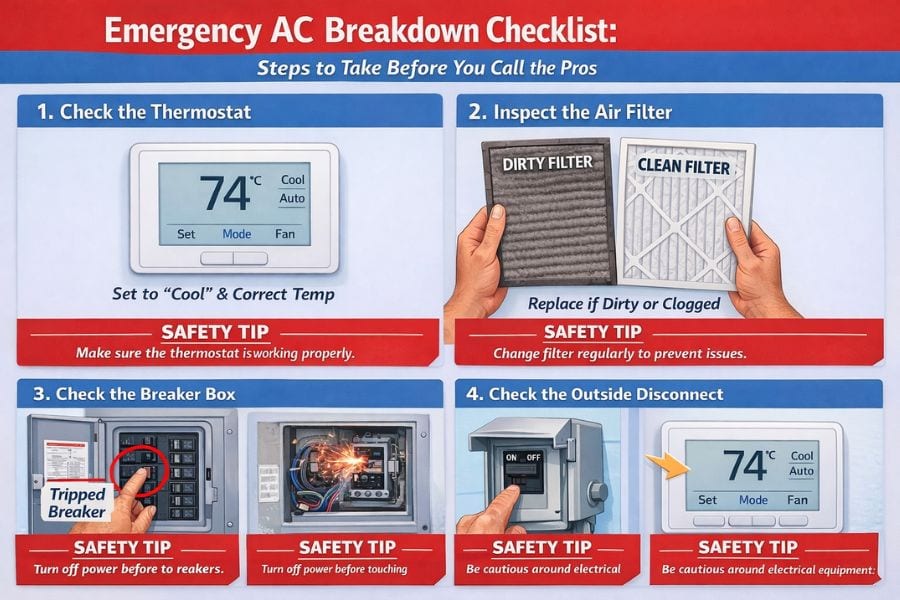
Step 1: Switch the system completely off. If your AC is blowing warm air, making unusual noises, or you suspect any electrical issue, shut it down immediately using your thermostat. This protects the compressor from damage caused by continued operation under fault conditions.
Step 2: Check thermostat basics. Confirm it is set to COOL mode, not heat or fan only. Replace batteries if the model uses them. Verify the display is illuminated and showing current temperature. A dead battery or accidentally changed setting causes symptoms that look like serious problems but are a five-second fix.
Step 3: Check circuit breaker and outdoor disconnect. Look for any tripped breakers serving your HVAC system in the electrical panel. Reset by switching fully off then back on. Also check the outdoor disconnect box near the condenser — someone doing yard work may have switched it off. If the breaker trips again immediately after reset, stop and call a professional. Repeated tripping indicates a serious electrical problem, not something to keep resetting.
Step 4: Replace your air filter. A severely clogged filter can cause the evaporator coil to freeze and trigger a safety shutoff. If the filter looks gray and packed or you cannot see light through it, replace it. Keep spare filters on hand during summer so you are never caught without one.
Step 5: Look for ice or water. Ice on copper refrigerant lines, on the outdoor unit, or around the indoor air handler points to serious airflow restrictions or refrigerant problems. Do not try to chip or melt the ice — document it for your technician. Water pooling around the indoor air handler usually means a clogged condensate drain. This needs professional clearing.
Step 6: Attempt one careful restart. After checking all the above and addressing anything obvious like a dirty filter, turn the system back on and observe. Wait the full three to five minute delay before expecting operation. If it fails to start, starts then shuts off quickly, or runs but produces warm air, turn it back off and leave it off.
Step 7: Call for professional diagnosis. A qualified technician can quickly find the issues homeowners cannot easily identify — refrigerant leaks, compressor problems, electrical faults, control board issues — and get you back to comfortable cooling with a permanent fix. You can also review the signs your AC needs repair to help identify what might be happening before the technician arrives.
When It’s an Emergency Requiring Immediate Response in Tomball
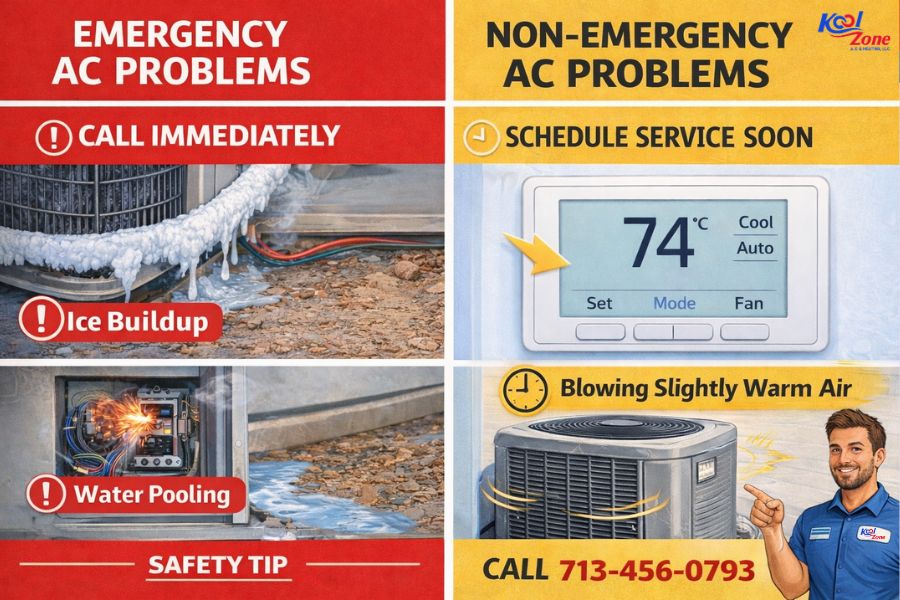
Call for urgent service without delay if you experience any of these:
Rapidly rising indoor temperatures with vulnerable people in your home: young children, elderly family members, or anyone with health conditions affected by heat. This is a health emergency, not just discomfort.
Burning smell or visible signs of electrical trouble: smoke, sparking, buzzing from electrical components, or breakers that will not stay reset. These are fire hazards requiring immediate professional attention.
Loud mechanical sounds like grinding metal, hard banging, or continuous buzzing. These signal catastrophic component failure in progress. Continued operation causes exponentially more damage.
Ice buildup combined with no airflow. Your system is trying to operate while frozen, which can destroy the compressor.
Water leaking that threatens floors, ceilings, or possessions, especially near finished spaces or valuable items.
In these situations, explain the circumstances clearly when you call and request priority service. Our guide on emergency AC repair in Tomball covers what to expect when you make that call.
Your Next Steps: Getting Professional Help Fast
If your AC has stopped cooling or is running constantly but cannot keep up with Tomball’s summer heat, stop guessing and stop restarting it hoping the problem resolves on its own. Getting a professional diagnosis is the fastest way to protect your equipment and restore your family’s comfort.
Kool Zone handles AC repair in Tomball TX and serves Cypress and The Woodlands as well. We explain exactly what failed, what it will take to fix it, and whether repair or replacement makes more sense for your situation. No runaround, no jargon.
If you want to stay ahead of problems rather than react to them, our HVAC maintenance plans start at $219 per year and include two tune-ups, waived diagnostic fees, and priority scheduling.
Call us at (713) 456-0793 or reach out through our contact page. You can also find us on Google Maps to read our reviews or get directions.