
If you have ever had your AC stop working in the middle of a Tomball summer, when temperatures are pushing 100 degrees and the humidity makes it feel even worse, you know it is not just inconvenient. It affects your family’s comfort, safety, and sleep. The good news is that most major AC failures are preventable with the right habits, some basic knowledge, and paying attention to early warning signs before they become emergencies.
Here is what actually works.

Local Insight: Why Tomball Homes Face Higher AC Failure Risk
Your air conditioner here is not a comfort appliance you use occasionally. It runs six to eight months a year, often continuously from June through September. Between the humidity that forces your system to remove moisture while cooling, the extended season that stretches from April into October, and the sudden temperature spikes from comfortable mornings to sweltering afternoons, your equipment faces demands that systems in moderate climates simply never experience.
Think of it like a work truck. If you depend on that truck every single day through tough conditions, hauling heavy loads and running in extreme temperatures, you do not wait for it to break down on the highway before taking care of it. You stay ahead of problems with regular maintenance because you cannot afford the downtime. The same logic applies to your AC.
The homeowners who consistently avoid emergency service calls in Lakewood Grove, Creekside, Northpointe, and throughout Tomball are the ones who treat maintenance as a routine responsibility rather than something they deal with after a breakdown.
What is the $5000 rule for HVAC?
Multiply your system’s age in years by the estimated repair cost in dollars. Over $5,000 points toward replacement. Under $5,000 points toward repair.
A 12-year-old system needing a $500 compressor repair: 12 times $500 equals $6,000. That points toward replacement. In Tomball’s climate, where systems run harder and longer than national averages, the age factor matters even more than it would in a moderate climate.
Full details on applying this are in our repair vs replace guide.
Can air conditioning cause itchiness?
Yes, and it happens more often than most homeowners realize, especially in Texas where AC runs constantly for months at a time.
The most common cause is excessive air drying. Air conditioners remove humidity while cooling, which is beneficial up to a point. But running the system continuously can drop indoor humidity below 30 to 35 percent, causing your skin to lose moisture and become dry and itchy. This is most noticeable in the mornings after hours of exposure to dry air overnight.
Dirty filters are another frequent cause. When a filter becomes clogged with dust, pollen, and pet dander, the system starts recirculating those particles instead of capturing them. Constant exposure can trigger skin sensitivity and allergic reactions in people who would not normally have issues.
Mold and mildew in ductwork, drain pans, or on evaporator coils is a third culprit. Humid climates like Tomball’s create perfect conditions for mold growth when condensate drainage is not working properly. That mold circulates through your home every time the system runs.
To prevent AC-related skin irritation, replace filters on schedule every one to three months, consider a whole-home humidifier to maintain 35 to 50 percent indoor humidity, and make sure your annual maintenance includes coil and drain system cleaning. If anyone in your home notices worsening skin or allergy symptoms when the AC is running, that is a signal something needs to be cleaned or adjusted.
What is the 20 rule for air conditioning?
The 20-degree rule is a practical benchmark for evaluating whether your system is operating at appropriate capacity. Your AC should be able to cool your home to approximately 20 degrees below the current outdoor temperature under normal operating conditions.
If it is 100 degrees outside, your properly functioning system should maintain around 80 degrees indoors without running absolutely continuously or struggling noticeably. On a 95-degree day you should be able to reach a comfortable 75 degrees.
This is not about instantly cooling your home 20 degrees or maintaining 60 degrees when it is 100 outside. It is about realistic sustained cooling capacity with normal insulation and typical heat gain from windows, appliances, and occupants.
If your system consistently fails to maintain even a 15-degree difference, or runs nonstop just to keep the home barely comfortable, that signals a problem worth investigating. Common causes include low refrigerant levels, restricted airflow from dirty filters or blocked ducts, poor insulation, an undersized system, or aging equipment that has lost capacity over time.
Catching this performance decline early allows for a straightforward repair rather than a breakdown during peak demand. Our guide on the most common AC problems in Tomball covers what typically causes each of these.
Is AC harmful for bronchitis?
A properly maintained AC system is not harmful for bronchitis. In fact it can help by reducing humidity, filtering airborne irritants, and maintaining consistent temperatures. The problem is when systems are not maintained.
Dirty ductwork accumulates dust, pollen, bacteria, and other particles that get blown into living spaces every time the system cycles on. For anyone with bronchitis whose airways are already inflamed, constant exposure to those irritants makes symptoms worse.
Filters past their replacement date stop capturing new pollutants effectively and can push previously trapped particles back into circulation when airflow forces buildup through degraded filter material.
Mold in drain pans, on coils, or in ductwork releases spores into indoor air that trigger respiratory inflammation. This is a particular concern in humid climates like Tomball’s when condensate drainage is not functioning correctly.
To protect respiratory health, replace filters every 30 days if anyone in the household has a respiratory condition. Schedule duct inspection and cleaning every three to five years, or more often if you notice musty odors or visible dust around vents. Keep indoor humidity between 35 and 50 percent since both too dry and too humid create problems.
A well-maintained system should meaningfully improve your indoor air quality compared to outdoor conditions. If respiratory symptoms get worse when the AC runs, that is a clear signal that professional cleaning and assessment are needed.
Simple Steps to Prevent AC Repairs (That Actually Work)
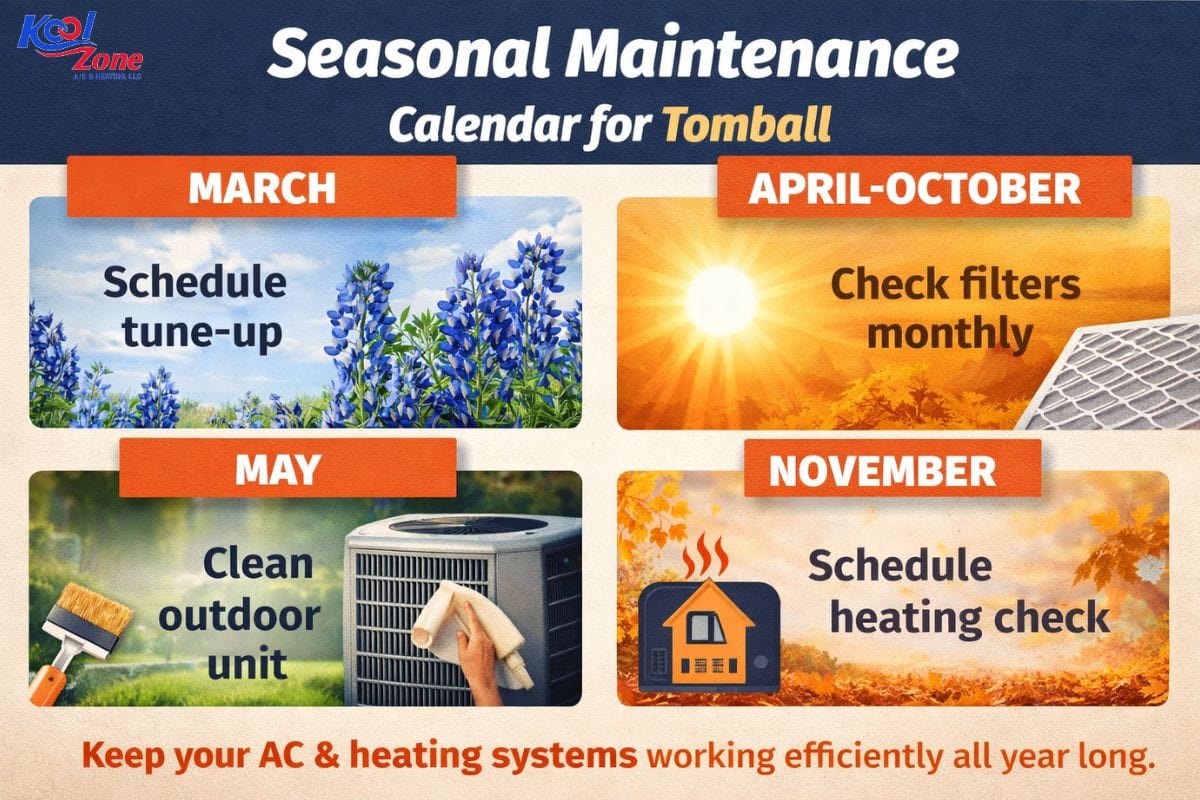
Change filters consistently. Set a recurring calendar reminder for every 30 to 90 days depending on your situation. More often if you have pets, allergies, or heavy AC use. Replace on schedule rather than waiting until you remember to check. This single habit prevents more AC problems than anything else.
Schedule professional tune-ups before summer hits. Book your maintenance appointment in March or April before cooling demand starts and before HVAC companies get backed up with emergency calls. Spring maintenance catches developing problems while they are still minor and affordable.
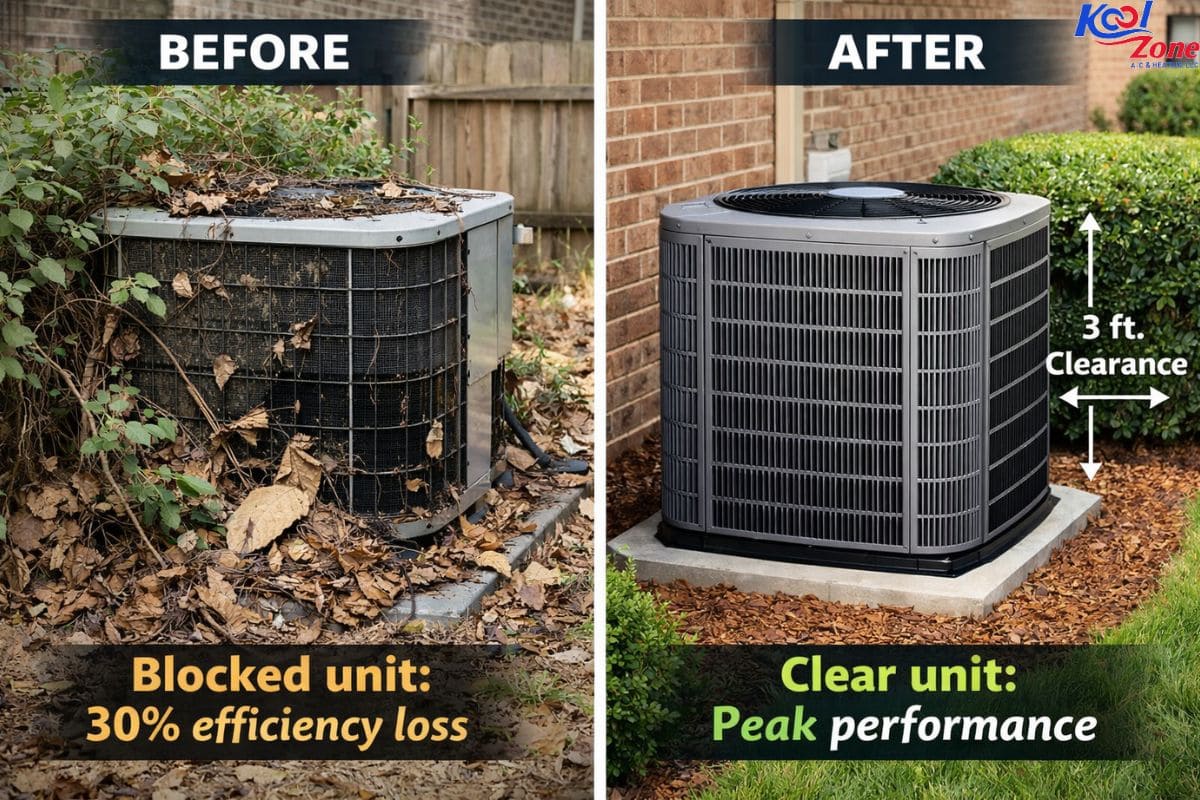
Keep your outdoor unit clear. Maintain at least two to three feet of clearance around the condenser on all sides. Trim back vegetation, remove debris from the top, and rinse the exterior coils gently with a garden hose once a month during heavy pollen season.
Watch your energy bill. If your summer electricity costs jump 20 to 30 percent compared to the same period last year with similar usage patterns, your system is working inefficiently. This warning often shows up before you notice any cooling problems, and catching it early means a straightforward repair rather than a crisis.
Never ignore small warning signs. A slight squealing noise, a room that has gradually become harder to cool, occasional ice forming on the refrigerant lines. These do not fix themselves. They get worse until a $150 repair becomes a $1,500 emergency. Our guide on the signs your AC needs attention covers exactly what to watch for. If you do face a sudden breakdown, our emergency AC repair guide walks through what to do.
If You’re in Tomball, Here’s How Kool Zone Can Help
Preventing problems before they start will always cost less than fixing failures after they happen. Kool Zone’s HVAC maintenance plans start at $219 per year and include two tune-ups, waived diagnostic fees on both visits, 10 percent off any repairs needed, and priority scheduling when something comes up. It takes the guesswork out of staying on schedule and keeps your system in the best shape heading into every Texas summer.
Whether you are dealing with an aging unit, inconsistent cooling, rising energy costs, or just want honest answers before summer arrives, call us at (713) 456-0793 or reach out through our contact page. You can also find us on Google Maps to read reviews from your Tomball neighbors or get directions.